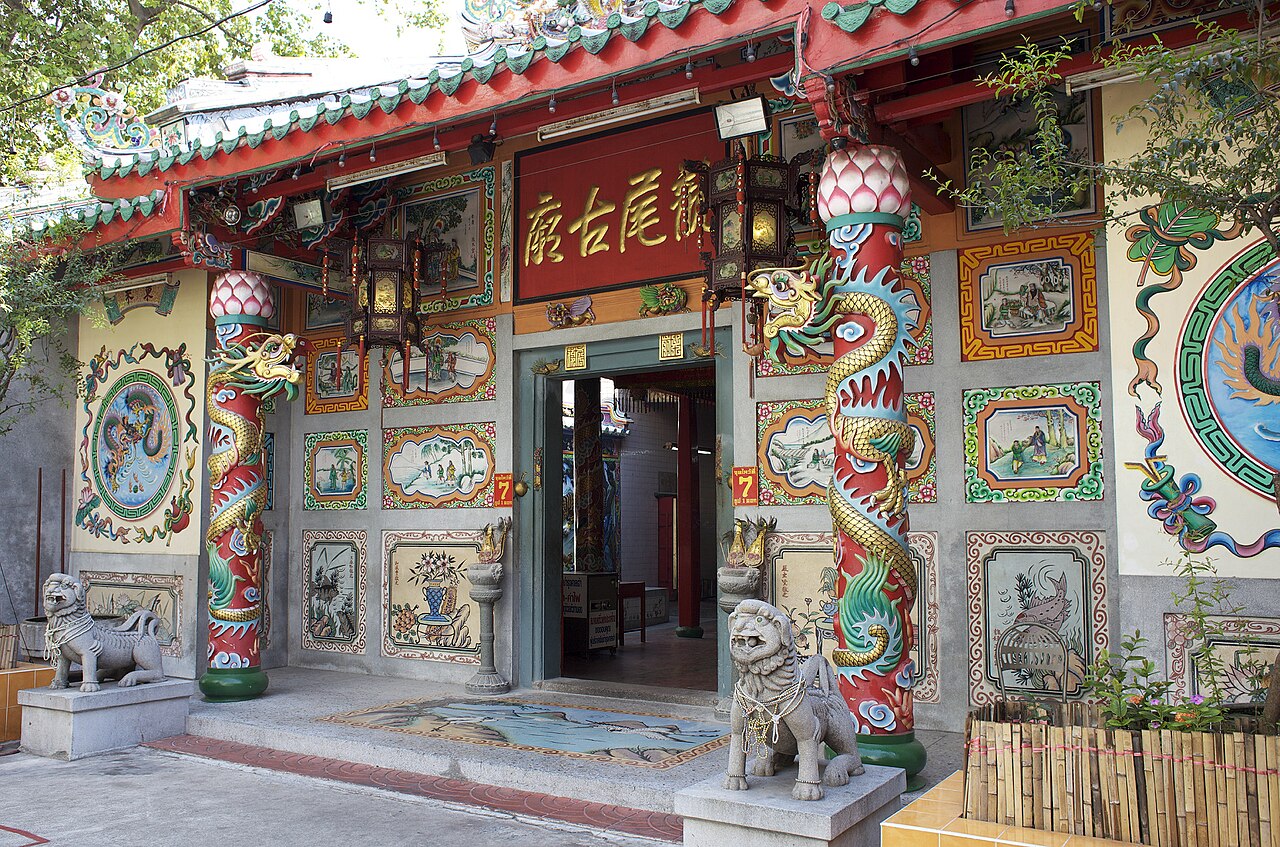
Leng Buai Ia Shrine
ภาพรวม
Leng Buai Ia Shrine is one of Bangkok Chinatown’s oldest Chinese shrines, sharing stories of Teochew heritage, trade, traditional architecture, religious life, and the living culture of Yaowarat.
🏮 Step into one of Bangkok Chinatown’s oldest Chinese shrines and discover a story shaped by Teochew heritage, trade, belief, and living market culture.
Leng Buai Ia Shrine is a historic Teochew Chinese shrine hidden within the old market lanes of Bangkok’s Chinatown.
The shrine is commonly associated with an old inscription dated to 1658. Although the exact construction history is still discussed, it is widely recognized as one of Bangkok’s oldest Chinese shrines and an important part of Yaowarat’s cultural heritage.
Its location inside a working market area reflects the close relationship between Chinese religious life, trade, family businesses, migration, and community networks.
The shrine features traditional Chinese architectural details, including decorated roof tiles, dragon designs, red columns, altars, plaques, bells, and religious objects preserved by the community.
Leng Buai Ia Shrine remains a living place of worship. Visitors may see people praying, making offerings, lighting incense, or taking part in seasonal religious activities. Tourism should never interrupt these practices.
🌙 Muslim-Friendly Planning at a Glance
Food: Leng Buai Ia Shrine is not a food stop. A separate halal meal should be planned before or after the visit.
Yaowarat has many restaurants, street-food stalls, markets, cafés, and dessert shops, but each provider should be checked individually before being included as a Muslim-friendly food option.
Prayer: The shrine is not a Muslim prayer location. Prayer timing and a suitable nearby mosque or prayer option should be planned separately.
Comfort: The shrine is located within narrow and active market lanes. Crowds, heat, rain, market smells, incense smoke, walking surfaces, toilets, and rest points should be considered.
Transport: Public transport, taxi, private vehicle, or walking may be suitable. Current station access, road conditions, parking, drop-off points, and meeting locations should be checked for the travel date.
✨ Why Visit Leng Buai Ia Shrine?
🏮 Teochew Chinese Heritage
Leng Buai Ia Shrine introduces visitors to the history of the Teochew Chinese community in Bangkok.
The shrine reflects how migrant families maintained religious traditions while building businesses, markets, homes, and community networks in the city.
🛍️ Faith and Market Life
The shrine stands within an old commercial neighborhood rather than inside a separate religious complex.
This setting shows how faith, trade, food markets, family businesses, and daily community life developed side by side.
🐉 Traditional Chinese Architecture
Visitors can observe decorated roof tiles, dragon designs, red columns, altars, plaques, bells, and traditional religious decoration.
These details help explain how architecture and symbols communicate protection, prosperity, identity, and community memory.
🙏 A Living Place of Worship
The shrine continues to serve worshippers and the surrounding community.
Visitors should keep voices low, avoid blocking prayer areas, and allow worshippers to complete their religious activities without interruption.
📜 Layers of Chinatown History
The shrine’s long history connects it with the development of Yaowarat before it became one of Bangkok’s best-known tourism and food districts.
It offers visitors a quieter way to understand Chinatown through religion, migration, trade, and community heritage.
🧭 Good To Know
⏱️ Suggested Time: Around 30–60 minutes
🚶 Walking Load: Light, but the surrounding market lanes may be narrow, crowded, or uneven
🏮 Activity Type: Active Teochew Chinese shrine, Chinatown history, traditional architecture, market culture, and respectful observation
👕 Dress Note: Wear respectful clothing and avoid clothing that is too revealing.
👟 Shoes: Follow current signs or caretaker instructions about footwear and access to religious areas.
🙏 Worship Note: Visitors do not need to perform any religious activity. Observe quietly and avoid touching offerings, statues, altars, or ceremonial objects.
📸 Photography Note: Ask before photographing inside the shrine, worshippers, ceremonies, caretakers, or restricted religious objects.
🕰️ Visit Note: Current access, ceremonies, festivals, maintenance, and suitable visiting times should be checked before travel.
🧧 Festival Note: Chinese New Year and other religious periods may bring larger crowds and changes to normal access.
🌫️ Incense Note: Incense smoke may be uncomfortable for visitors with asthma or other breathing sensitivities.
🛍️ Market Note: The surrounding lanes are part of an active local market. Visitors should avoid blocking shops, doorways, deliveries, or pedestrian movement.
🚻 Comfort Note: Toilet access, seating, shade, and rest points should be checked before arrival.
♿ Accessibility Note: Narrow lanes, thresholds, crowds, and entrance conditions should be checked for visitors with limited mobility.
🌿 Best Use: Bangkok Chinatown heritage visit, Teochew community story, traditional architecture stop, market-culture experience, or cross-cultural Culture Card
🌟 Best For
Travelers interested in Chinese heritage in Bangkok
Visitors who enjoy historic shrines and traditional architecture
Travelers interested in Teochew culture and migration stories
Visitors exploring Yaowarat beyond its food streets
Families and small educational groups
Travelers interested in markets, trade, and community history
Photography-focused visitors who can follow shrine and market guidance
Muslim travelers who want separate food and prayer planning around the visit
🔗 Add This Place to Your Travel Plan
Leng Buai Ia Shrine is not currently part of a fixed SalamXP route.
You can visit it as a single cultural stop or combine it with other places in Yaowarat, Sampeng, and Bangkok’s old Chinese commercial districts to create your own travel plan.
The best plan will depend on your travel date, group size, crowd comfort, walking needs, transport, food requirements, prayer timing, and available visiting time.
SalamXP can help check shrine access, festival conditions, market crowds, visitor etiquette, transport, prayer options, halal meal planning, toilets, and timing before the visit.
✅ Plan This Stop with SalamXP
Share your travel date, group size, age range, crowd comfort, walking needs, food requirements, prayer needs, and travel style with SalamXP.
Our team will help check suitable visiting times, shrine access, ceremonies, festival conditions, photography guidance, toilets, accessibility, public transport, halal meal options, prayer planning, and nearby support.
Sidebar
⚠️ Managing Expectations
Usually
Best for Teochew Chinese heritage, historic architecture, Chinatown trade stories, market culture, and respectful cultural learning.
Expect a small active shrine within busy and narrow market lanes.
Not Usually
Not a Muslim prayer location or automatic halal food stop.
Quiet access, interior photography, toilets, accessibility, and entry during ceremonies should not be assumed.
Your Role
Share your travel date, group size, crowd comfort, food needs, prayer needs, and walking requirements with SalamXP.
SalamXP will help check access, etiquette, market conditions, transport, food planning, prayer options, and visit timing.