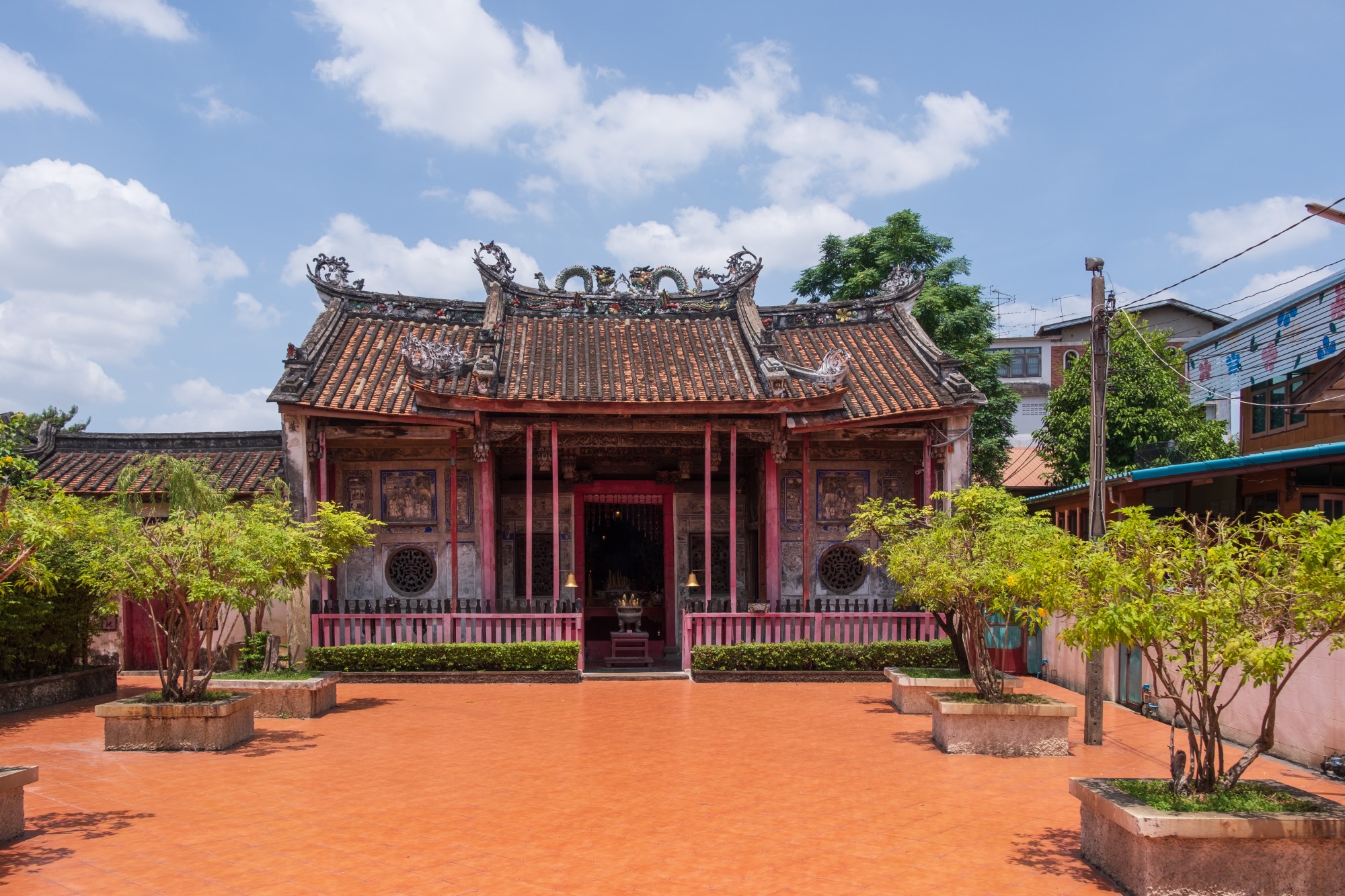
Kian Un Keng Shrine / Guanyin Shrine
ภาพรวม
Kian Un Keng Shrine is a historic Hokkien Chinese shrine in Bangkok’s Kudi Chin community, sharing stories of Guanyin devotion, riverside craftsmanship, and multicultural community heritage.
🏮 Discover a historic Hokkien Chinese shrine where Guanyin devotion, riverside craftsmanship, and Bangkok’s shared community memory come together.
Kian Un Keng Shrine, also known as Kuan An Keng Shrine or Guanyin Shrine, is a historic Chinese place of worship in Bangkok’s Kudi Chin community.
The shrine stands close to the Chao Phraya River and is connected with the history of Hokkien Chinese families who became part of the old Thonburi community.
The shrine is dedicated to Guanyin, a respected figure associated with compassion in Chinese religious traditions. Its wooden structure, detailed carvings, paintings, roof decoration, and quiet riverside setting make it an important place for learning about Chinese craftsmanship and community faith.
Kian Un Keng Shrine is part of a wider neighborhood where Chinese, Portuguese-Catholic, Buddhist, and Muslim communities have lived close to one another. The visit offers more than architecture—it introduces visitors to Bangkok’s long history of cultural exchange and shared community life.
The shrine remains a living religious site. Visitors should experience it quietly, respect worshippers, and follow guidance from the shrine’s caretakers.
🌙 Muslim-Friendly Planning at a Glance
Food: Kian Un Keng Shrine is not a food stop. A separate halal meal should be planned before or after the visit.
Local desserts, cafés, restaurants, and community food providers should be checked individually before being included as Muslim-friendly food options.
Prayer: The shrine is not a Muslim prayer location. Prayer timing and a suitable nearby mosque or prayer option should be planned separately.
Comfort: The surrounding community includes riverside paths and narrow walking areas. Heat, rain, shade, incense smoke, toilets, seating, and walking comfort should be considered before the visit.
Transport: Visitors may arrive by river transport, public transport, taxi, private vehicle, or walking. Current pier services, drop-off points, parking, traffic, and meeting locations should be checked for the travel date.
✨ Why Visit Kian Un Keng Shrine?
🏮 Hokkien Riverside Heritage
The shrine introduces visitors to the story of Hokkien Chinese families who became part of historic Thonburi.
Its location beside the river reflects a period when waterways were important for travel, trade, settlement, and community life.
🙏 Guanyin and Living Faith
Guanyin is an important figure in Chinese religious traditions and is commonly associated with compassion.
Visitors can observe how faith continues through prayer, offerings, incense, festivals, and the daily care of the shrine.
🪵 Traditional Craftsmanship
The shrine is known for its wooden architecture, detailed carvings, paintings, and decorative work.
These features help visitors understand the skills, symbols, and artistic traditions preserved within historic Chinese religious buildings.
🤝 A Shared Community Story
Kian Un Keng Shrine stands within the multicultural Kudi Chin neighborhood.
The surrounding area shows how Chinese shrines, Catholic churches, Buddhist temples, Muslim communities, homes, and riverside spaces became part of one historic district.
🌿 A Living Religious Site
The shrine is not only an old building or photography location.
Visitors should give priority to worshippers, keep voices low, avoid blocking religious areas, and follow instructions from community representatives.
🧭 Good To Know
⏱️ Suggested Time: Around 30–60 minutes
🚶 Walking Load: Light, with possible narrow riverside paths and uneven surfaces
🏮 Activity Type: Active Chinese shrine, Hokkien heritage, Guanyin devotion, traditional craftsmanship, and community history
👕 Dress Note: Wear respectful clothing and avoid clothing that is too revealing.
👟 Shoes: Follow signs or caretaker instructions about footwear before entering religious areas.
🙏 Worship Note: Visitors do not need to take part in religious practices. Observe quietly and avoid touching altars, offerings, statues, or ceremonial objects.
📸 Photography Note: Ask before photographing inside the shrine, worshippers, ceremonies, caretakers, or restricted religious objects.
🕰️ Visit Note: Visitor access, ceremonies, festivals, community activities, and suitable visiting times should be checked before travel.
🌫️ Incense Note: Incense smoke may be uncomfortable for visitors with breathing sensitivities.
☀️ Weather Note: Parts of the community visit are outdoors. Heat, rain, shade, and drinking water should be considered.
🚻 Comfort Note: Toilet access, seating, and rest points should be checked before arrival.
♿ Accessibility Note: Narrow paths, entrances, steps, and access for visitors with limited mobility should be checked for the travel date.
🌿 Best Use: Bangkok Chinese heritage visit, Hokkien community story, religious architecture stop, riverside walk, or cross-cultural Culture Card
🌟 Best For
Travelers interested in Chinese heritage in Bangkok
Visitors who enjoy traditional architecture and craftsmanship
Travelers interested in Guanyin traditions and living religious culture
Families and small educational groups
Visitors exploring Kudi Chin and historic Thonburi
Travelers interested in multicultural community history
Photography-focused visitors who can follow shrine guidance
Muslim travelers who want separate food and prayer planning around the visit
🔗 Add This Place to Your Travel Plan
Kian Un Keng Shrine is not currently part of a fixed SalamXP route.
You can visit it as a single cultural stop or combine it with other places in Kudi Chin, Thonburi, and the Chao Phraya riverside area to create your own travel plan.
The best plan will depend on your travel date, group size, walking comfort, transport, food needs, prayer timing, and available visiting time.
SalamXP can help check shrine access, community etiquette, transport, prayer options, halal meal planning, toilets, weather, and timing before the visit.
✅ Plan This Stop with SalamXP
Share your travel date, group size, age range, walking comfort, mobility needs, food needs, prayer needs, and travel style with SalamXP.
Our team will help check suitable visiting times, shrine access, religious events, photography guidance, toilets, accessibility, walking conditions, river transport, halal meal planning, prayer options, and weather conditions.
Sidebar
⚠️ Managing Expectations
Usually
Best for Hokkien Chinese heritage, Guanyin traditions, wooden craftsmanship, riverside history, and respectful cultural learning.
Expect a quiet religious and community setting with narrow walking paths.
Not Usually
Not a Muslim prayer location or halal food stop.
Interior access, photography, toilets, accessibility, and entry during ceremonies should not be assumed.
Your Role
Share your travel date, group size, walking needs, food needs, and prayer needs with SalamXP.
SalamXP will help check access, etiquette, transport, food planning, prayer options, and visit timing.